🔹 Reminder: There are two entrances to Nauyaca Waterfalls, but only one Nauyaca Waterfall Nature Park 🦥.
Don’t get confused—make sure you arrive at the right place! 

📍 How to get there? Follow your preferred map link:

From Uvita

Green and Black Poison Dart Frog: A Jewel of the Forest at Nauyaca Waterfall Nature Park

Discover the green and black poison dart frog (Dendrobates auratus), one of Costa Rica’s most colorful amphibians, and learn where you may encounter it while exploring the tropical forest and trails of Nauyaca Waterfall Nature Park.

Table of Contents

Costa Rica is home to nearly 5% of the world’s biodiversity, and among its most striking wildlife species is the green and black poison dart frog (Dendrobates auratus).

At Nauyaca Waterfall Nature Park the combination of high humidity, well-preserved tropical forest, clean water sources, and diverse microhabitats creates ideal conditions for this remarkable amphibian. Visitors exploring the park’s trails may have the opportunity to spot these small, colorful frogs among fallen leaves, wet rocks, and vegetation close to streams.

For nature lovers, photographers, and wildlife enthusiasts, encountering a green and black poison dart frog is one of the many memorable experiences that make Nauyaca an exceptional destination for discovering Costa Rica’s biodiversity.

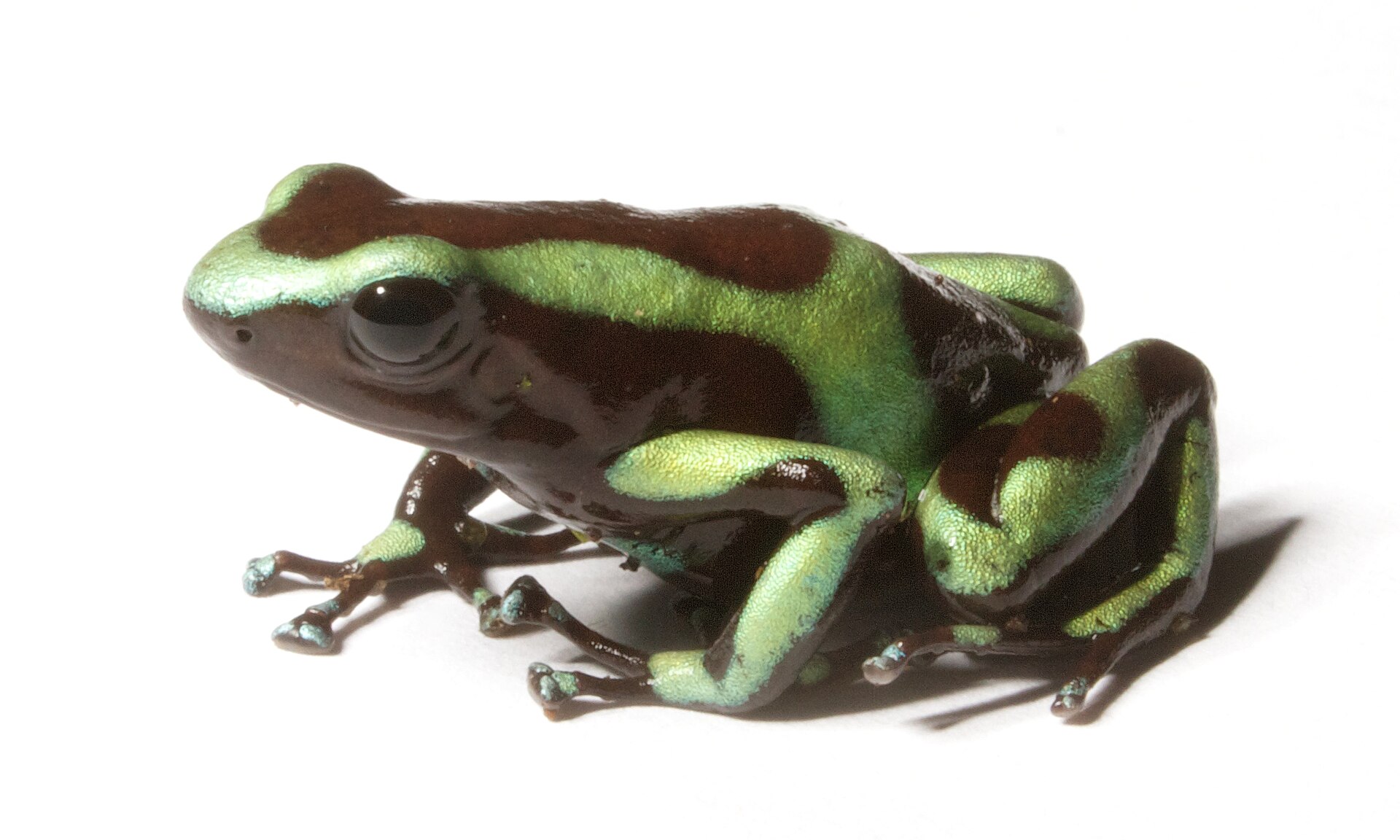
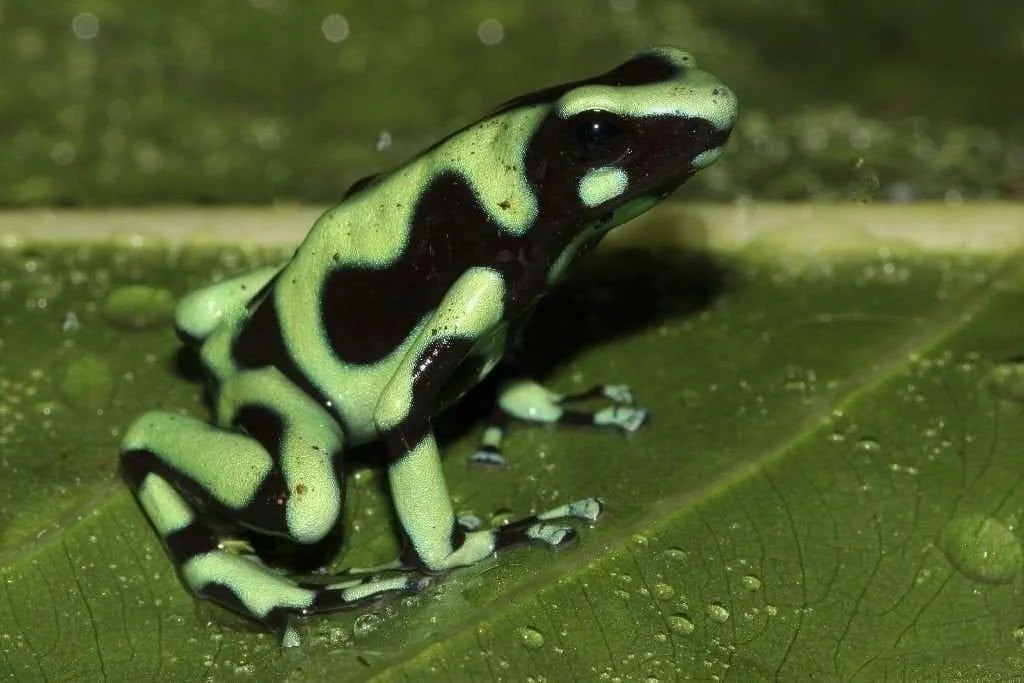
green and black poison dart frog

[Brian Gratwicke] / Wikimedia Commons — CC BY 2.0

Why Is It Called a Poison Dart Frog?

The name “poison dart frog” has an interesting historical origin.

For centuries, some Indigenous communities in South America used the toxic secretions of certain frog species to coat the tips of blowgun darts used for hunting. This practice eventually gave rise to the English name “poison dart frog.”

However, not every species belonging to this group was traditionally used for this purpose. The green and black poison dart frog belongs to the family Dendrobatidae, but Dendrobates auratus was not among the primary species historically used to poison hunting darts.

green and black poison dart frog

A Small Frog with Remarkable Colors

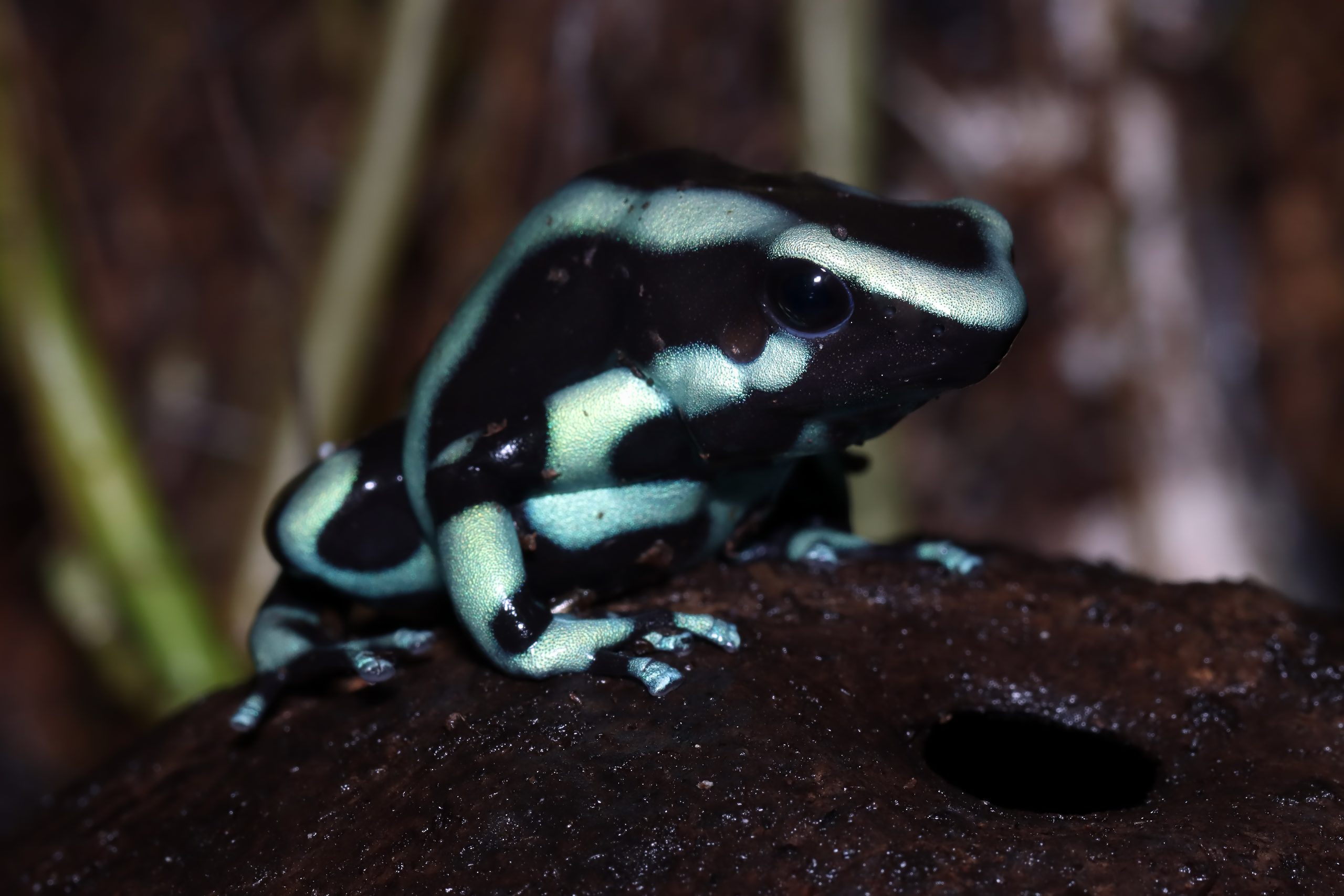
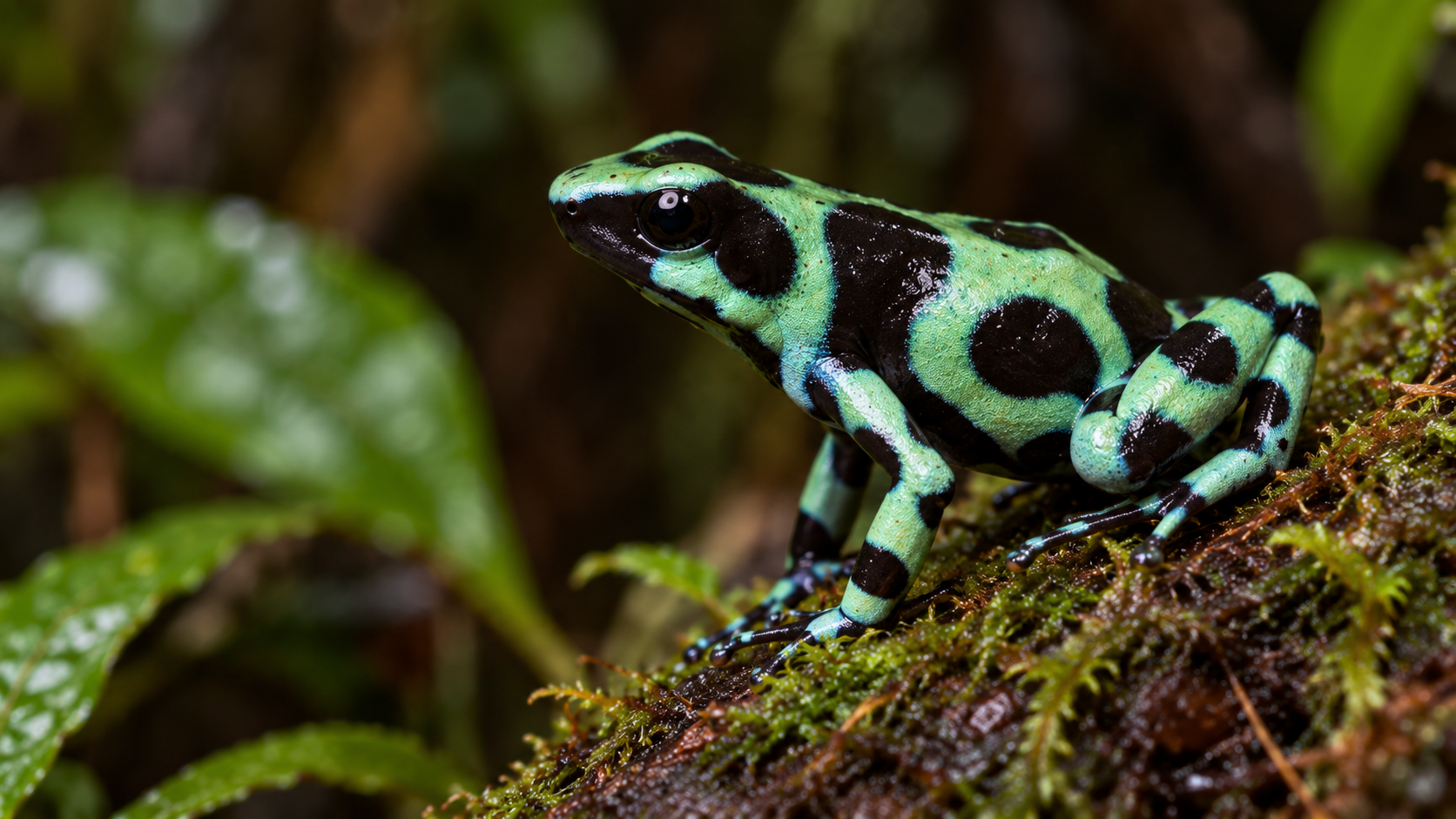
The green and black poison dart frog is immediately recognizable because of its vivid combination of emerald green, turquoise-green, or blue-green markings over a dark background.

These brilliant colors are not simply decorative. They are an example of aposematic coloration, a biological warning signal that tells potential predators that the frog may contain defensive toxins.

Despite measuring only around 3 to 5 centimeters in length, this small amphibian is one of the most visually distinctive animals visitors may encounter while exploring the tropical forest.

Unlike many frog species that are primarily active at night, Dendrobates auratus is diurnal, making it easier to observe during daytime hikes through the trails of Nauyaca Waterfall Nature Park.

Its bright coloration and daytime activity also make it a fascinating subject for wildlife photography.

green and black poison dart frog

[Benjamint444] / Wikimedia Commons — CC BY 2.0

Is the Green and Black Poison Dart Frog Dangerous to Humans?

Although it belongs to a family commonly known as poison dart frogs, the green and black poison dart frog does not normally represent a danger to visitors when observed responsibly in its natural habitat.

In the wild, these frogs obtain many of the chemical compounds associated with their toxicity through their diet, which includes tiny ants, mites, and other arthropods.

When poison dart frogs are raised in captivity without access to this specialized natural diet, their toxicity is greatly reduced or may disappear altogether.

Visitors should nevertheless avoid touching wildlife. Observing the frog from a respectful distance protects both the animal and the visitor while allowing the frog to continue performing its ecological role undisturbed.

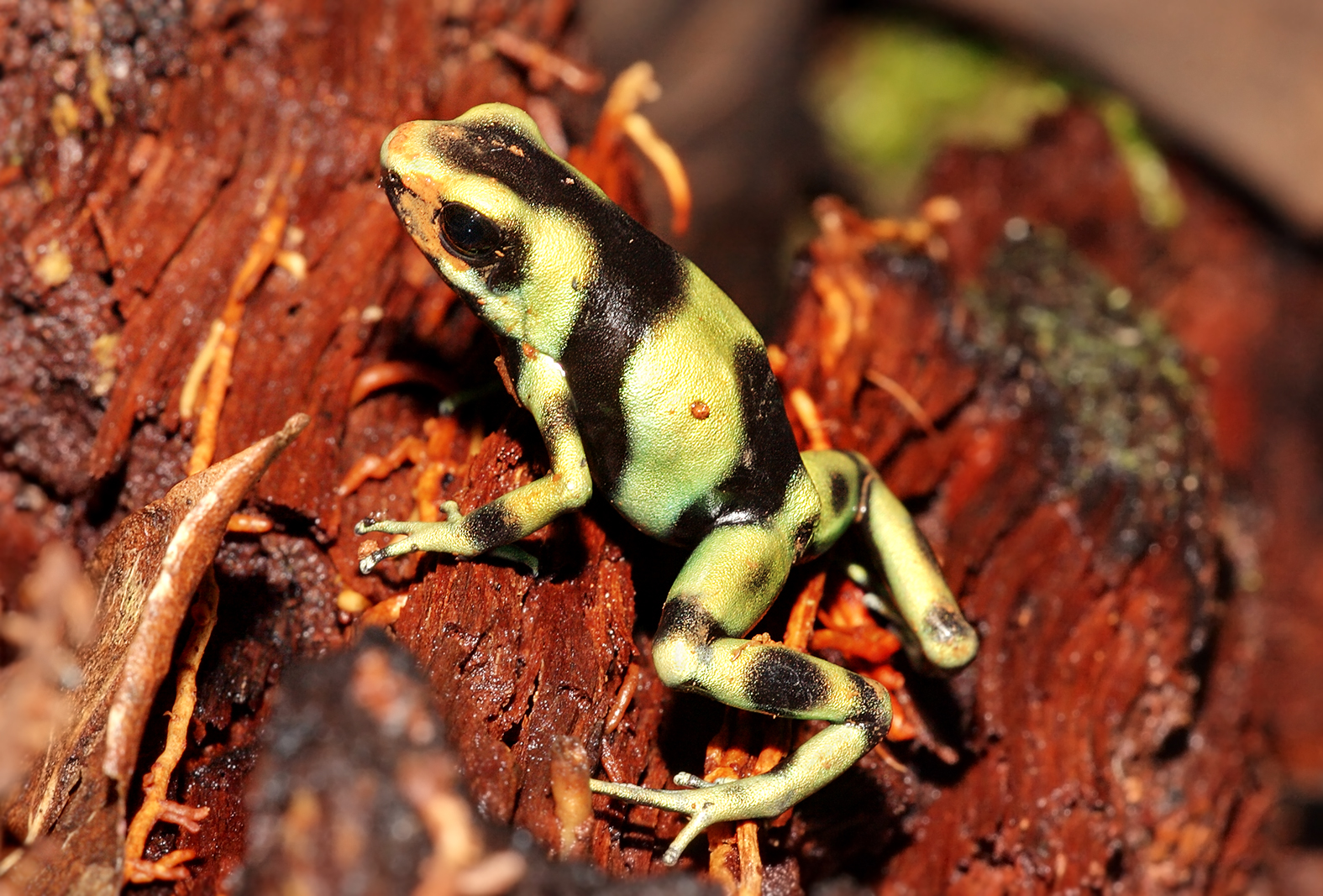
green and black poison dart frog

[Franz Xaver] / Wikimedia Commons — CC BY 2.0

Amphibians are highly sensitive to environmental conditions, which makes their presence valuable when assessing ecosystem health.

Green and black poison dart frogs depend on environments with high humidity, suitable vegetation, healthy insect populations, clean water, and relatively stable forest conditions.

Finding these frogs within Nauyaca Waterfall Nature Park reflects the ecological richness of the area and the importance of protecting the tropical forest surrounding the Nauyaca waterfalls.

Conserving these habitats supports not only amphibians but also the extraordinary variety of birds, mammals, reptiles, insects, plants, and other species that form part of Costa Rica’s tropical ecosystems.

A Sign of a Healthy Tropical Forest

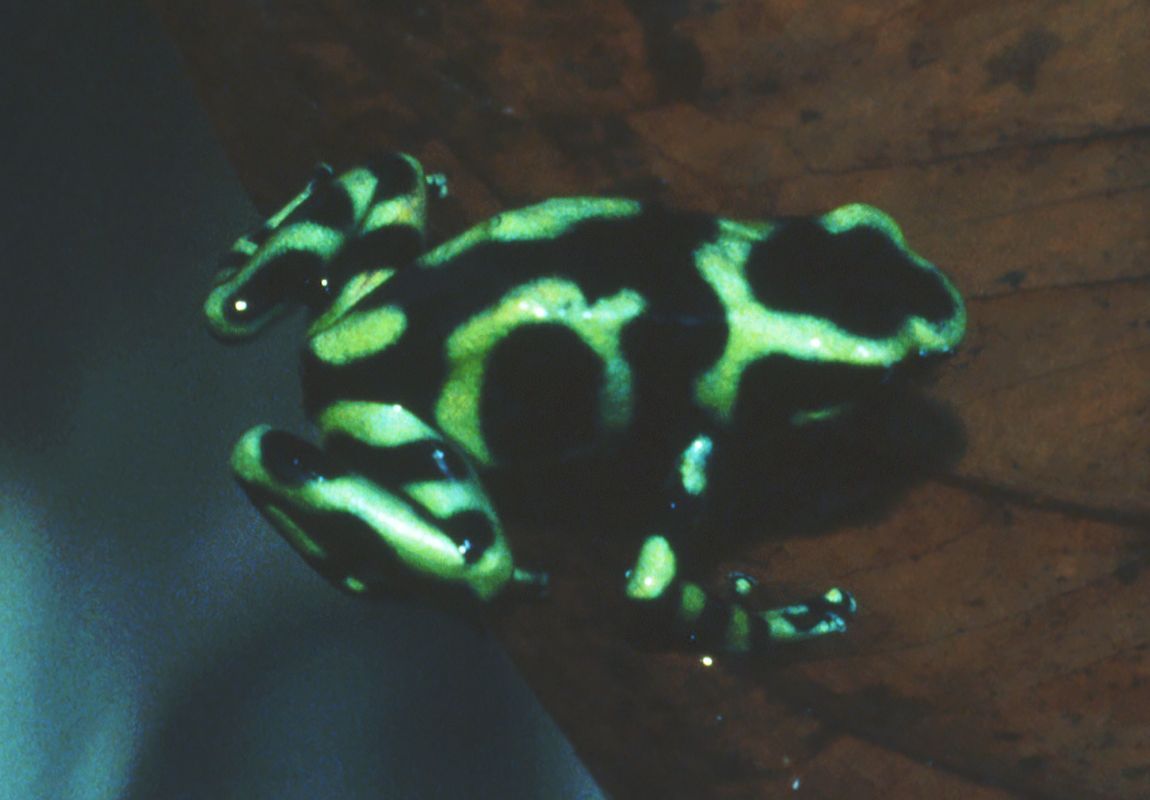
green and black poison dart frog

Wildlife Encounters at Nauyaca Waterfall Nature Park

The famous Nauyaca waterfalls are one of the main reasons travelers visit this region of Costa Rica, but the journey through the forest is also an important part of the experience.

Along the trails of Nauyaca Waterfall Nature Park, visitors can discover a diverse tropical environment filled with plants, birds, insects, reptiles, amphibians, and other wildlife.

With a careful eye, you may spot a green and black poison dart frog moving through the leaf litter, resting near wet vegetation, climbing over roots, or exploring areas close to small streams.

Wildlife sightings can never be guaranteed, but paying attention to the forest often reveals details that are easy to miss when focusing only on the destination.

green and black poison dart frog

Every encounter with wildlife offers a glimpse into the extraordinary biodiversity that has made Costa Rica one of the world’s best-known destinations for ecotourism and nature travel.

The green and black poison dart frog is a perfect example: a tiny amphibian whose vivid colors, fascinating biology, and dependence on healthy tropical ecosystems make it one of the forest’s most remarkable inhabitants.

During your next visit to Nauyaca Waterfall Nature Park, keep your eyes on the vegetation and forest floor as you explore the trails.

Between the sound of flowing water, tropical birds, and the surrounding rainforest, you may discover this small green and black jewel—one of the many species that make the natural environment surrounding the Nauyaca waterfalls so special.

Discover Costa Rica’s Biodiversity at Nauyaca

Ready to plan your visit?

Spread the word!

Facebook
Twitter
Email
WhatsApp